Popular Posts

Sunday, 17 February 2019

Film Reviews: America's Most Hated [Vice, 2018]

Vice (2018)

[Reader disclaimer: there will be spoilers discussed].


Alright. I'm going to open with my generalised statement for this movie: it's not my favourite. I have no intention of ever watching this film again. This is not to say that it is a bad film, just not one that I would consider to be in league with the other nominees in Best Picture.

That being said, let's dive in. So, Vice (2018) is another political biopic, concerning itself with the life and career of Republican official, Dick Cheney (played by Christian Bale). I will admit that I am not very attuned to the political climate in the United States (as I am a lowly reviewer from England, UK), so had I not watched this for my blog, I would never have been inclined to pick it up and give it a watch. The only socio-political biopic based in America that I can think of off the top of my head (that I enjoyed, I mean) is probably Frost/Nixon (2008) and that's from 10 years ago now.

So, because I'm not well-versed in American politics, perhaps I was not as engaged as an average American would be. But I believe a biopic (especially one that is up for Best Picture) should have a universal appeal, which I'd argue that Vice does not. 

I'd say that this film toes the line between satirical and just plain silly: it needed to lean one way or the other, because some sections depicted Cheney and his lackies as cartoonish villains and then other sections would try to humanise them. I ended up wondering whether Adam McKay, director of Vice, should've stuck to inserting politics into comedy rather than the other way round because this format didn't really work for me.

That being said, there were parts of this film that I truly appreciated. The use of freeze frames and voice over felt akin to the works of Martin Scorsese mashed up with the hilariously propagandised works of Paul Verhoeven, giving the film an interesting and unique tone. 

The bizarre segments interspersed within the narrative, including a Shakespearean-esque soliloquy, Cheney's fourth wall break, an end credit sequence mid-way through the film (a stylistic choice used as a kind of 'fakeout') and a post-credit scene of characters debating the possible political bias of the film, made Vice stand out from past biopics: this accompaniment of an unreliable narrator and disregard for general filmmaking rules made it an entertaining watch.

However, this film has a glaring problem. It may end up demonising Cheney and his Republican posse but I don't think Vice is entitled to its merit on the basis that it's a political film. BlacKkKlansman (2018) is a political film but I hold it in higher regard than Vice because it gives us something worth watching: the empowerment of minorities and the struggles they face as a community. Vice is about yet another old, white, male politician, abusing his power within a systematic country with far too much power for its own good. If I wanted to watch that again, I'd just stick The Ides of March (2011) on.

Overall, anything included in this film can be garnered from five minutes traipsing Wikipedia, rendering the movie's information obsolete: stylistically, yes, it's rather interesting and worth watching, but the plot holds no real substance.

What's it nominated for?

Currently, Vice is nominated for:

  • Best Picture - Adam McKay, Dede Gardner, Jeremy Kleiner, Megan Ellison, Will Ferrell, Kevin J. Messick and Brad Pitt
  • Best Actor - Christian Bale
  • Best Supporting Actor - Sam Rockwell
  • Best Supporting Actress - Amy Adams
  • Best Director - Adam McKay
  • Best Original Screenplay - Adam McKay
  • Best Film Editing - Hank Corwin
  • Best Makeup - Greg Cannom, Kate Biscoe and Patricia Dehaney-Le May

Should it win?

In the simplest possible way: absolutely not. I think it has a shot at Best Makeup but that's about it: it is outranked in pretty much every single category it's nominated for, which is such a shame because both Sam Rockwell and Amy Adams gave stellar performances respectively. 

Overall rating: 5/10

- K

Film Reviews: You're Pretty When Outraged [The Favourite, 2018]

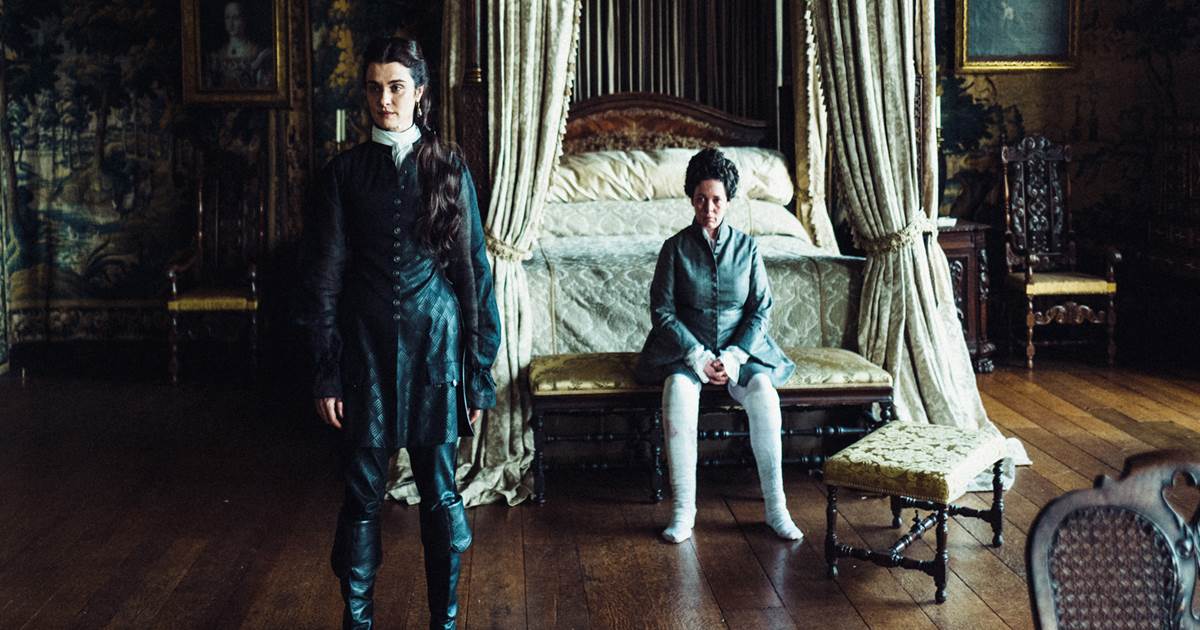
The Favourite (2018)

[Reader disclaimer: there will be spoilers discussed].


Next up on our list is The Favourite (2018), a historical drama focusing on 18th century ruler Queen Anne (played by Olivia Colman) and her relationship with her friend, Sarah (played by Rachel Weisz) and Sarah's cousin, Abigail (played by Emma Stone).

What is essentially a story of two women trying to win favour with the queen, this film is surprising in many ways. The dialogue, atypical of its genre, was wonderfully weird and vulgar in places. The quasi-queer chemistry between our main characters drove the narrative for the main part but the addition of other supporting actors (such as Nicholas Hoult and Joe Alwyn) made for some delightfully strange and, at times, harrowing scenes. 

One thing that especially stood out for me was structure and stylism. As aforementioned, this film is far from a stereotypical insight into a historical moment, moreso it is a period of time fashioned by modernised camera techniques (e.g. the use of a fish-eye lens) and title cards with witty quips and quotes to structure the narrative into acts. 

The main selling point, in my opinion, is that everybody is a villain but likeable in their own way. Weisz is a hard-hitting, tough-loving cast member whose on-screen relationship with Colman is, to put it plainly, simply spellbinding. Colman, in turn, is the other end of the spectrum: paranoid, daft yet stern, and somewhat child-like. These opposing forces make for some truly exceptional interactions, conveying both vulnerability yet a deep-seated relationship which in some scenes goes unsaid because it's unnecessary.  

Though I deeply enjoyed The Favourite, it had its flaws: its use of quick cuts are effective but, I feel, the use of transitions are misplaced. The pace of the film takes a drastic drop after the second act and, although consistent afterwards, feels as though it is dragging itself along; the end scene itself was (in my opinion) entirely too long. 

There are also questions left unanswered in the stead of the film's conclusion. Why is Queen Anne so opposed to the sound of music? Why does Abigail strive for power, knowing that she can never hold it under the current monarch's rule? I suppose some things are supposed to be left to the imagination but if you're going to include small details, at least allude to an explanation, otherwise deem it unnecessary to the plot and emit it entirely. 

Other than that, I have very little to chastise this film for. It's nowhere near perfect, but it's most certainly one of the best of the ones I've seen so far: in essence, I understand why it's nominated for Best Picture.

What's it nominated for?

Currently, The Favourite is nominated for:

  • Best Picture - Yorgos Lanthimos, Ed Guiney, Ceci Dempsey and Lee Magiday
  • Best Actress - Olivia Colman
  • Best Supporting Actress - Emma Stone and Rachel Weisz
  • Best Director - Yorgos Lanthimos 
  • Best Original Screenplay - Deborah Davis and Tony McNamara 
  • Best Cinematography - Robbie Ryan
  • Best Costume Design - Sandy Powell
  • Best Film Editing - Yorgos Mavropsaridis
  • Best Production Design - Fiona Crombie and Alice Felton

Should it win?

I see no reason why it shouldn't. Amongst the other four films I've watched thus far, I'd rank it in the top tier, purely due to its originality and performances from both Colman and Weisz. 

As for the actress awards, Colman will be hard-pushed to beat Gaga: not due to ability, mind you, but due to popularity. Gaga sits well with modern audiences and, although Colman is far more established, I'd argue that the marketing for The Favourite wasn't as strong as A Star Is Born (2018); I'd say that Weisz will nab Best Supporting, which is a shame because Amy Adams was phenomenal in Vice (2018).

I mentioned in my review of Black Panther (2018) that it was a strong contender for Best Costume Design, given that it goes unrivalled by any other films, however I will say that the costumes in The Favourite were absolutely gorgeous and surprisingly contemporary in some places, and therefore I believe the award is going to be a tug-of-war between the two.

Overall rating: 8/10

- K

Saturday, 9 February 2019

Film Reviews: One Great Singer Does Not A Movie Make [A Star Is Born, 2018]

A Star Is Born (2018)

[Reader disclaimer: there will be spoilers discussed. This piece also contains material of a sensitive nature].


And now onto one of the more surprising nominees on our list this week: A Star Is Born (2018). I have seen so much damn hype about this film and I couldn't for the life of me bring myself to sit down and watch it until, one night during the week, I conceded defeat and allowed myself to watch with an open mind.

I will say this: Bradley Cooper and Lady Gaga have amazing vocals throughout this film, Gaga especially. Some of the songs were hair-raising due to Gaga's exceptional range (though that was to be expected). I even enjoyed the introduction of her character, conveying a kind of manic yet controlled woman who expresses herself through drag clubs and isn't afraid to pull a punch (a scene in which her character, Ally, clocks a dude in the jaw was top tier comedy and no one can change my mind on that). However, on the flipside, the introduction to Jackson (played by Cooper) felt like a heavy-handed slap to the face, immediately jumping to the washed-up rocker cliche, a trope we've seen a million times.

Jackson's character is more in-depth than that later on, as we see that he is an ACOA (Adult Child of an Alcoholic) who is suffering from alcoholism and depression himself. I found this aspect of his character to be very realistic and the sequence in the third act in which he commits suicide is so hauntingly powerful due to its lack of diegetic sound and parallels with an earlier anecdote in which his character explains that he previously attempted suicide at the age of 13 by hanging.

The end of the film felt particularly poignant, with Ally returning to her natural hair colour (a nod to her returning to her roots, no pun intended) and singing a heartbreaking song to honour Jackson's character. The third act, overall, undoubtedly yanks at your heartstrings and refuses to let go until you've coughed up at least one stray tear.

However. That is the third act. As for the first two, I have to say that there were elements that just didn't meet the mark for me. 

For example, the initial interaction between Jackson and Ally (and then the subsequent interactions after that) felt horribly awkward in places, with characters stepping on each other's lines and sometimes forgetting or refusing to make eye contact where deemed necessary: I think this may have been Cooper's attempt at realism but I just found it distracting. I would go as far as to say that the dialogue is enjoyable but clumsily executed for the most part.

Ally's character also gave me food for thought because, despite being wonderfully fleshed out and well written, she takes a complete U-turn in dealing with Jackson, cutting between scenes of initially coming to terms with the fact that he's an alcoholic and then shots of her almost enabling him, indulging in his stupid behaviour as if they're children. If this is character development, then I'd say it felt insincere and an injustice to her character.

I wouldn't say that A Star Is Born is a necessarily bad film: on the contrary, I found myself surprised by how much I enjoyed it. The thing is, and I may be shot for saying this, it feels as if A Star Is Born is this year's La La Land (2016): united by passion of music, divided by creative ambition and personal demons. What I mean to say is, this didn't feel particularly original in terms of story (although I suppose it wouldn't be, considering it's a remake...of a remake...of a remake...and so on).

What's it nominated for?

Currently, A Star Is Born is nominated for:

  • Best Picture - Bradley Cooper, Bill Gerber and Lynette Howell Taylor
  • Best Actor - Bradley Cooper
  • Best Actress - Lady Gaga
  • Best Supporting Actor - Sam Elliott
  • Best Adapted Screenplay - Bradley Cooper, Eric Roth and Will Fetters
  • Best Cinematography - Matthew Libatique
  • Best Sound Mixing - Steve A. Morrow, Jason Ruder, Dean Zupancic and Tom Ozanich
  • Best Original Song - Shallow - Lady Gaga and Bradley Cooper

Should it win?

Again, in terms of Best Picture, no. In comparison, it just doesn't meet the standard, in this writer's opinion. That's not to say that it isn't a good film with some exceptionally beautiful moments in it, but I doubt it'll win Best Picture.

I also highly doubt that Bradley Cooper will win Best Actor, either: the drawl he created for his character in this film felt akin to Jeff Bridges in True Grit (2010), that is to say, I could barely fucking understand him for the majority of this film.

In lending her vocals to this feature film, Gaga has most certainly ensured that it'll win at least one award, though, and I believe that'll be Best Original Song, as it's one of the film's greatest assets.

Overall rating: 7/10

- K

Friday, 8 February 2019

Film Reviews: I Will Price It, I Will Cash It

Bohemian Rhapsody (2018)

[Reader disclaimer: there will be spoilers discussed. This piece also contains material of a sensitive nature].


Third film on my list of Best Picture nominees is the "critically acclaimed" Bohemian Rhapsody (2018), a long awaited biopic that focuses on band Queen's late frontman, Freddie Mercury (played almost to perfection by Rami Malek).

Admittedly, I was wary of watching this film. I had heard rumours within the cesspool of opinionated film snobs (otherwise known as Twitter) that the film was riddled with so many inaccuracies that one could even claim it to be an injustice to Mercury's memory. I was also horrified to hear of its original director, Bryan Singer, being completely unprofessional and rude on set, as well as later being arrested for sexually assaulting young men.

But we're not here to judge that. We're here to judge the film. And, to put it politely, it did not deliver on its promise of an exhilarating crash-course through Freddie Mercury's life: it was more of a stumble through the hedges of glorified nostalgia.

I think the main reason this film was nominated for Best Picture was Rami Malek's performance: there may be aspects of this film that are lacking but no can deny that Malek as Mercury is absolutely sensational. From the eccentric mannerisms down to the almost perfect recreation of iconic scenes (such as Live Aid 1985), he truly embodied the late frontman. 

The film also does a fantastic job of representing Mercury's heritage and culture, his tendency to be gender non-conforming, the reason behind his immaculate voice, even the emotional elements of the narrative that dealt with grief, loneliness and compensating for such with artificial extravagance were handled wonderfully. 

So why is it that I genuinely didn't enjoy this film as much as I was supposed to?

The dialogue felt formulaic and inconsequential at the best of times. The pacing was entirely off in a lot of scenes, pulling the viewer out of immersion and slapping them in the middle of montages that felt rushed and poorly edited. 

Two things also stuck out like a sore thumb to me and both are linked to the theme of sexuality. Now, I'd been led to believe that the inclusion of Mercury's sexuality in the film had been out of the question and subsequently removed, hence my aversion to watch it in the first place. But then it came out that not only had they included it but they had also touched on the subject of his later years, when he was diagnosed with AIDS.
Okay, I thought, I suppose it's worth a shot.

Firstly, the scene in which Mercury admits to possibly being bisexual was so strange in so many ways. The interactions, again, felt obviously structured and it was as if Mary's (played by Lucy Boynton) feelings were just shoe-horned in through expositional dialogue: you only arguably become emotionally invested due to being sympathetic to Mercury's internal struggle, whereas Mary felt like she was there to be a plot device and nothing more.

Secondly, there is the demonisation of Paul (played by Allen Leech) and the queer groupies. Just when I thought the film was being progressive, it took a 180 turn and did what so many other films have done in the past: used the trope in which queer = villain. 
In the final act as well, Mercury leaves behind Paul and the others but is shortly after diagnosed with AIDS, making it feel as if it was set-up to be some kind of punishment for indulging in Paul's world of homosexuality and flamboyance. This is also wholly inaccurate in terms of chronology, as Mercury would not learn of his illness until two years after Live Aid, in which the film closes on.

The film takes liberties with real life, as I would assume it would, but there's adding fiction to reality and then there's fabricating storylines just to be dramatic. The way they handled Mercury's sexuality in this film is, in my opinion, rather distasteful, both as a film-goer and a queer person. 

What's it nominated for?

Currently, Bohemian Rhapsody is nominated for:
  • Best Picture - Graham King
  • Best Actor - Rami Malek
  • Best Sound Mixing - John Casali, Tim Cavagin and Paul Massey
  • Best Film Editing - John Ottman
  • Best Sound Editing - Nina Hartstone and John Warhurst

Should it win?

Best Picture? Short answer: no. In comparison to films like BlacKkKlansman (2018) and Black Panther (2018), Bohemian Rhapsody just doesn't make the cut for me. It's undoubtedly an interesting biopic, executed through a phenomenal performance from Malek, but I don't think it's up to Best Picture standard. 

Although I'd love to see Willem Dafoe win, I am almost 99% certain that Rami Malek will win Best Actor this year, and I think it will be well-deserved if he does. However, I wouldn't want to see this win Best Picture when there are some clear frontrunners that supercede Bohemian Rhapsody.

Overall rating: 6/10

- K

Saturday, 2 February 2019

Film Reviews: Wakanda Forever [Black Panther, 2018]

Black Panther (2018)

[Reader disclaimer: there will be spoilers discussed].


For the second film this week, I watched Black Panther (2018) and I must admit, I had already seen this one before, though this is the only nominee I've seen prior to reviewing it. You've probably already read a million articles on this film due to its notoriety and enormous following, but I still think it's worth touching on, for the sake of keeping things in equal running for Best Picture.

I would like to go on record now and say that I am indifferent to the Marvel franchise. You have some critics that will rip holes in every single scene to make a point (though I never really know what their point is, other than being an asshole) and you have some critics that are die-hard nerds and will lovingly (but biasedly) praise a Marvel film, no matter how it comes out. I am neither and try to remain objective when reviewing these kinds of movies.

Black Panther opens with a visually dynamic and aestheticised animation, with a voice-over giving the viewer context to who and what the Black Panther is. Whilst I would normally chastise a film for opening with a lazy device like storytelling, I found myself applauding the film for it on this occasion: perhaps it was because I was unfamiliar with the source material or just because I was genuinely immersed from the get-go, but either way, I found it engaging. 

I think it needs to be said that although the cast is phenomenally funny and strong in their delivery of scenes, the aspects of Black Panther that shouldn't be slept on are costume design and musical score, two things that it has been (rightfully) given a nomination for respectively. 
The costume design is exceptional, beautifully incorporating traditional African garb with quasi-futuristic designs; the musical score seamlessly blends the sounds of the djembe drum and artificial synthwave to create something customary yet contemporary as a result. I would argue that one of the film's biggest assets, in a technical sense, is its use of sound. 

As aforementioned, I loved the cast. I loved that the cast was predominantly POC and that Martin Freeman and Andy Serkis, being two of the only Caucasian actors in the film, did not overshadow anyone else's performance. I love that Okoye (played by Danai Gurira) became a showstopper with her choreography and witty dialogue. I love that the villain had valid points and criticisms of the Wakandan policies, and that his desire to liberate other African-Americans in the world, though motivated more by repressed hatred than a need for equality, was wholeheartedly justified (just not in the way that he planned to do it).

Now, as much as I'd like to give this film two thumbs up, there are some downsides. I found the pacing to be irregular in parts, grinding almost to a halt and then losing me amidst a flurry of CGI fight scenes. And talking of CGI, let's be honest: there was no need for the rhinos, guys. The rhinos were fun but completely unnecessary. 

What's it nominated for?

Currently, Black Panther is nominated for:
  • Best Picture - Kevin Fiege
  • Best Original Music Score - Ludwig Göransson
  • Best Costume Design - Ruth E. Carter
  • Best Sound Mixing - Steve Boeddeker, Brandon Proctor and Peter J. Devlin
  • Best Production Design - Hannah Beachler and Jay Hart
  • Best Sound Editing - Steve Boeddeker and Benjamin A. Burtt
  • Best Original Song - All The Stars - Kendrick Lamar and SZA

Should it win?

Whilst I highly praise Black Panther for it's costuming and musical score, I feel that it may not win its respective categories: it's always likely that a period piece will win favour for costuming (in this case being a close call between Mary Queen of Scots and The Favourite) and the music score nominees include Alexandre Desplat, a composer who already has two Academy awards under his belt for The Grand Budapest Hotel (2014) and The Shape of Water (2017) and therefore is a likely frontrunner for this year's win. 

As for Best Picture, whether it will win or not, I'm inclined to say it won't. That's not to discredit this film's genuinely amazing quality but I would say that, because of its reliance on CGI-cluttered action sequences and sometimes shoe-horned humour, it falls behind the other nominees in terms of Academy standards. 

Overall rating: 8/10

- K

Friday, 1 February 2019

Film Reviews: All Power To All The People [BlacKkKlansman, 2018]

BlacKkKlansman (2018)

[Reader disclaimer: there will be spoilers discussed. This piece also contains material of a sensitive nature].


Hello and welcome back to K.Smith Blogs! I have been inactive for about a month due to deadlines and some personal issues but I have returned in lieu of that glorious time of year: Oscars season. I'll be posting twice a week until the end of this month, reviewing each film that is currently nominated for Best Picture and giving my thoughts (as I always do) on how it fares as both a movie and also a nominee (I will also include my thoughts on certain films that are nominated for more than one category).

We're kicking off today with BlacKkKlansman (2018), a biopic based on Ron Stallworth, the first African-American detective in the Colorado Springs police force in the 1970s. I will let you know now that I went into seeing this film with absolutely no context: I had read no reviews nor watched any interviews with the cast. I went in blind, and thank god I did, because this rose in my estimations instantly.

Let's start with the opening, a monologue of American, radicalised propaganda performed by Alec Baldwin. Immediately the film steps on your throat with its satire but equally frightening sense of reality: to the more progressive of us in society, this opening is funny and we recognise that, tonally, it is mocking the old prejudiced ways of American socio-politics. However, what becomes daunting is that as the film progresses, this violently discriminatory mindset is still very much founded in our current political climate, in parts reflecting President Trump's ideologies and biased towards people of colour. 

The most interesting part of this film, at least to me, was the parallels between showing black empowerment and white supremacy. There are two or three scenes that marry harmoniously together, specifically in the third act where a man named Jerome Turner (played by Harry Belafonte) is recalling an anecdote in which his mentally handicapped friend was falsely accused of rape and consequently berated and murdered in public, which in turn contrasted with shots of the KKK watching a film and shouting racist slurs, screaming profanity whenever an African-American actor appeared on screen, and banding together to chant in chilling unison, "white power". 

This was the part of the film that I found hardest to watch (not that I found any of it particularly easy). To see such disgusting behaviour, such intolerance towards other human beings, made me feel insanely shameful, and I think anybody like myself who is white should feel that way when watching it. Because the beauty of BlacKkKlansman is conveying the importance of "power to all the people" and showing that in the 70s and in modern day, white people still threaten that ideal. 

This film has tremendously witty dialogue, interspersed at perfect moments to either break tension or bring a scene to a grinding, poignant halt. The humour is dry yet snappy, the monologues eloquent and powerful: it was engaging, as it should be, for anyone watching.

One of the most important parts of this film, which is very unusual, is the end. Most films come to a rounded conclusion or a stalemate in a narrative, but BlacKkKlansman is not taking it easy on anybody, nor should it. At the end of the film, we are shown real footage from 2017, in which neo-nazis marched in Charlotesville: we are shown the real David Duke (played by Topher Grace in the film) sympathising with President Trump's speeches, we are shown white men and women marching the streets and chanting of their supposed "oppression", and finally we are shown the car that was driven into a crowd of people, injuring many and killing a woman named Heather Heyer, whom the film is partially dedicated to.

This ending, though difficult to watch, is arguably the most powerful part of the film. It's easy to fictionalise events and show them on screen through actors and settings and lighting, but once you are shown reality, you are forced to conceptualise and accept that these were not just dramatised events: these were things that happened, that are happening now to minorities not just in America, but globally. 

I would highly recommend this film to anybody. I would even say that it is crucial for people to watch this film, to understand the history behind it and to see where its relevancy applies to our lives now, because it is scary to think that the KKK ideology is still around us. It disguises itself as neo-nazis, the alt-right, MAGA. It's real and I think this film does a fantastic job of storytelling in a visceral yet still thoroughly entertaining way.

What's it nominated for?

Currently, BlacKkKlansman is nominated for:
  • Best Picture - Spike Lee, Jordan Peele, Sean McKittrick, Jason Blum and Raymond Mansfield
  • Best Supporting Actor - Adam Driver
  • Best Director - Spike Lee
  • Best Original Music Score - Terence Blanchard
  • Best Adapted Screenplay - Spike Lee, Kevin Willmott, Charlie Wachtel and David Rabinowitz
  • Best Film Editing - Barry Alexander Brown

Should it win?

Hard to say at this point. As I'm writing this, I have only viewed two of the eight contenders for Best Picture, but I'd certainly say that it has a good chance: it would be almost a failing to not consider it at least top three tier when it comes to who should win, that's for sure.

Adam Driver is a spectacular actor, however, I doubt he'll be nabbing the win for Best Supporting Actor, as he's up against people like Sam Rockwell and Mahershala Ali. I will say that John David Washington being snubbed as a nominee for Best Actor didn't sit well with me: he was a big focus of the film and carried the narrative along so efficiently. The fact that Driver was nominated, and Washington wasn't, seems incredibly disingenuous. 


Overall rating: 9/10

- K

Saturday, 1 December 2018

Film Reviews: Cut The Strings, I Wouldn't Bother [Cassadaga, 2011]

Cassadaga (2011)

[Reader disclaimer: there will be spoilers discussed. This piece also contains material of a mature nature].


During the month of October, I elected to post a horror film a day on my Instagram (aptly hashtagged "spoopy month"), which is a tradition I started last year in order to recommend niche horror films to my followers. Whilst traipsing my rolodex of horror this year, I recalled a film from a while back called Cassadaga (2011), and felt it was probably time to give it a second viewing.

It is unfortunate when you rewatch a horror film and find it to be lacklustre, and that was sadly the case for this film. Let's start with the first 60 seconds of the film, which were so insanely problematic that I'm almost ashamed to admit that I didn't realise it until I rewatched. 

We are introduced to the main antagonist as a child: a young boy playing with a porcelain, marionette doll and donning a cute, pink dress. Cue the parent coming in to cut up the dress and smash the doll, berating her son for dressing up as a girl: now, this maybe wouldn't have been such a problem if it was purely an allegory to being a transgender child, however (contextually) this is about a boy who grows up to become a serial killer. The film is heavily suggesting that the boy's dysphoria and mental instability/bloodlust is intrinsically linked, a dangerous and unforgivingly cliche for transgender characters.

No, the film does not explicitly depict the boy as transgender, but it doesn't take a rocket scientist to see that this is what they were going for. Perhaps it is a homage to other films who have used this method, such as Psycho (1960) or Calvaire (2004), but either way it's problematic and arguably unnecessary. If you think dysphoria is a motivation for murder, then perhaps you should do some more research on your subject. 

Jumping forward somewhat, and staying on the subject of explicitness, the film has a difficult time letting the viewer draw their own deductions. In the first two minutes of the runtime, our protagonist suffers a personal tragedy with her sister being hit by a bus. I'm aware this is supposed to make us immediately empathise with the character, and we are given flashbacks after the fact, but slapping a character death on the viewer so early on in the narrative (and then giving us flashbacks doused in expositional dialogue) is incredibly lazy and unimaginative. We aren't given time to understand the relationship between these characters, why it's so inexplicably tragic that the sister has died: we're just given the basic formula of character + tragedy = jumpstart for the narrative. 

Another example is that the writers tried to misdirect the audience to believe that Thomas' character (played by Lucas Beck) is the serial killer, when it is in fact a different one. This isn't especially new but the best plot twists are often the simplest: however, Cassadaga did not execute this in a successful fashion. We are given scenes of Thomas masturbating to violent pornography, withdrawn and rarely seen in most of the film, as if to say "hey look! It's totally this guy! The weirdo no one sees!"

If you're too on the nose with your misdirection, you more often than not end up arousing more suspicion within the viewer than intended. Sure, I thought nothing of it when Thomas' grandmother (played by Louise Fletcher, of all people!) stated that people rarely saw him, but the moment that they showed him pleasuring himself to taboo porn was the moment that it clicked that the film was trying to throw me off and convince me that he was the murderer, which clearly he wasn't. 

I will say that this film had moments of brilliance. One example in particular is the first shot we see of Gepetto (the serial killer) in his workshop, overly saturated and industrial in its presentation. It felt very gritty and the scenes of him experimenting on women and turning them into human marionette dolls were wonderfully disturbing, albeit only taking up a few moments here and there throughout the runtime (which I found slightly disappointing, but I'm just a sucker for gruesome, bodily dismemberment in films). 

I even liked what the film was going for, blending supernatural and psychological horror together with the introduction of a ghost character called Jennifer (played by Amy LoCicero): the ghost is of one Gepetto's victims who eventually leads the protagonist, Lily (played by Kelen Coleman) to the true identity of the serial killer. It drives the narrative along but still maintains its creep factor, giving us more than one evil to focus on. 

However, I can't say much for the rest of the film. A glaring problem I had after watching it again was the plot holes, and I genuinely believe that this film relies on logic where deemed necessary. One example is that Gepetto (who is revealed to be the gardener, Christian, played by Rus Blackwell) mentions Jennifer to the protagonist early on in the film...why? I understand that this is probably an attempt to misdirect Lily (and us, the audience) but I can't quite understand why Christian would mention Jennifer in the first place: in doing so, the protagonist starts to look into her mysterious disappearance, eventually deducting that the ghost haunting her is the same woman. But if Christian had never mentioned it, it's likely that she would've never made that connection. 

Another example is that when kidnapping his victims, Christian poses as a wheelchair-bound man with his face covered, and throws his voice so that his victims turn around and he can launch from his chair to chloroform them. At first, I wasn't sure how he was doing this: I've heard of people being able to project their voices and make them sound like they're coming from a different source. But in the third act of the film, it's a female voice that can be heard, not his. So is this a ghost? Or can he magically alter his voice to sound nothing like his? Is he supernatural?

Sadly, we never really find this out. We also never find out why, in some scenes and not others, the Jennifer ghost can be seen by more than one character. And this is perhaps the largest issue with Cassadaga: it wants to be clever and subvert your expectations, but remains inconsistent in the application of its own logic. Intriguing an audience, though, means that they pay closer attention, therefore I'd argue that you cannot afford to skimp out on important details or plot points in a desperate attempt to hurl down the train tracks of your plot without putting too much thought into it. 

In conclusion, dear reader, I would recommend skipping out on this one. You cannot fault a film for trying to be inventive and clever, but you can most certainly judge it for failing to do so.

If you liked this film, I'd also recommend the following:

  • The Hills Have Eyes (1977)
  • Wrong Turn (2003)
  • The Midnight Meat Train (2008)
  • The Collector (2009)
  • Hush (2016)

Overall rating: 5/10

- K